
A homeowner who says half the outlets stopped working has described a symptom, not a repair. The cause could be a failed device, a loose connection, an open neutral, a tripped protection device somewhere else on the circuit, or previous work that changed the circuit in a way nobody documented.
The electrician still has to interview the homeowner, reproduce the problem, trace the affected circuit, test safely, isolate the failure, and explain the correction. That work has value even when the final repair takes only a few minutes.
Troubleshooting becomes unprofitable when the contractor treats all of that time as a free estimate and charges only for the part installed at the end. A clear diagnostic structure protects the electrician's schedule while giving the homeowner a fair explanation of what they are paying for.
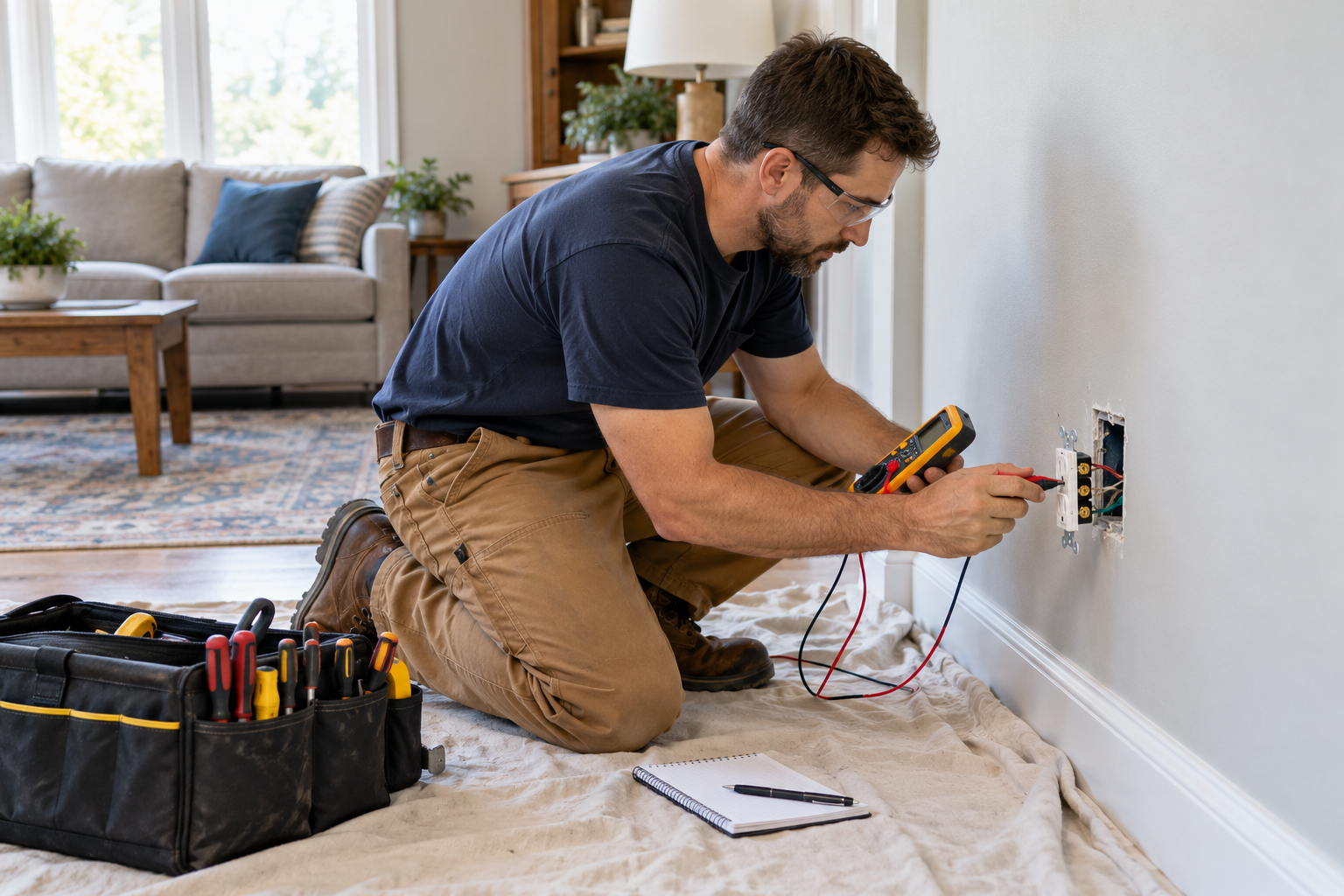
The Diagnosis Is the Initial Scope
Installation work usually starts with a defined result. Replace a panel. Add a receptacle. Install six recessed lights. The contractor can inspect the conditions, calculate labor and material, and prepare an estimate around a known scope.
Troubleshooting starts with an unknown. The homeowner knows what stopped working, but neither side knows how far the investigation will go until testing begins. Giving a firm repair price before the cause is identified forces the contractor to guess.
Treat diagnosis as the first authorized service. Its deliverable is a supported finding and a recommended next step. The repair becomes a separate decision after enough information exists to price it responsibly.
Build the Diagnostic Charge Around the Time the Call Consumes
A 45-minute visit rarely consumes only 45 minutes. The schedule also carries travel, loading, conversation at arrival, setup, documentation, payment, and the drive to the next stop. A minimum diagnostic charge needs to recover the realistic block of time the appointment removes from the day.
Start with the hourly revenue the service operation needs to produce. Include field compensation, payroll burden or subcontractor cost, vehicle expense, office overhead, insurance, tools, and profit. Then estimate the total time normally consumed by a residential troubleshooting appointment.
For example, a company that needs to produce $200 per field hour and typically commits two hours of total capacity to a service call cannot build a sustainable diagnostic program around a $99 visit. The exact numbers vary by company, but the charge has to follow the company's cost structure instead of a competitor's advertised minimum.
Define the Initial Diagnostic Window
Tell the homeowner how much diagnostic time is included before the electrician is dispatched. Many contractors use a minimum service charge that includes arrival and a defined amount of testing time. Others charge a dispatch amount plus diagnostic labor in fixed increments.
Either structure works when the boundary is clear. The homeowner needs to know that the initial charge covers investigation, not every repair that might be discovered. The electrician also needs a clear stop point before additional diagnostic time is added.
Avoid language that promises the problem will be solved within the initial window. Some faults are found at the first failed device. Intermittent problems and altered circuits often require more tracing. Promise a professional investigation for the agreed time, then communicate the findings and options.
Collect Better Information Before Dispatch
The first call should establish what is happening and whether the condition needs a normal appointment or immediate safety attention. Ask what stopped working, when the problem began, whether a breaker or GFCI has been reset, and whether the homeowner noticed heat, odor, buzzing, flickering, or visible damage.
The answer also helps assign the right electrician and reserve a realistic appointment window. A single dead receptacle after a device replacement is different from repeated breaker trips across an older addition.
Do not coach an unqualified homeowner through opening equipment or working around energized parts. The intake process is for understanding the symptom and identifying obvious urgency. Testing belongs to the qualified person onsite.
Separate Diagnosis From Repair Authorization
Once the cause is known, explain what failed, what correction is recommended, and what the repair will cost. Get approval before moving from diagnosis into billable repair work.
For a simple correction using stocked material, the electrician might present a same-day repair price. A larger finding might require a written estimate, permit research, material ordering, or a return visit. The original diagnostic charge still covers work already completed.
Some companies choose to apply part of the diagnostic fee toward an approved repair. That can be a useful sales decision, but it needs to be built into the repair price. Crediting away the full charge without recovering the diagnostic labor puts the company back in the same position as offering free troubleshooting.
Use Stop Points on Open-Ended Problems
Residential troubleshooting can expand quickly. The electrician finds that the affected circuit leaves the panel correctly, disappears through several finished areas, and includes devices added during an undocumented remodel. Continuing without another conversation leaves the homeowner watching the clock without knowing where the bill is going.
Set a stop point near the end of the included diagnostic window. Summarize what has been tested, what has been ruled out, and what the next stage requires. Then get authorization for another block of time or prepare a separate proposal.
This approach gives the homeowner control over spending without asking the electrician to keep investigating for free.
Price the Appointment as a Service Call, Not a Tiny Job
Short electrical calls lose margin in the same places as other small residential projects. The drive and setup still happen. The customer conversation still takes time. Payment and documentation still need to be completed before the technician leaves.
Schedule the visit around the full block of time it consumes, then price the work from that block. Stacking several optimistic one-hour appointments across town creates late arrivals and rushed diagnostics. A realistic calendar protects the service quality and the rest of the day's work.
Our guide on keeping small jobs profitable explains why travel and setup need to stay visible in pricing.
Stock Common Repair Material Without Hiding Labor
A well-stocked service vehicle helps the electrician finish straightforward repairs without another trip. That improves production, but it does not make the diagnosis free. The contractor still invested time and skill to identify which device or connection required attention.
Keep diagnostic labor and repair pricing visible as separate parts of the invoice. The material might cost very little while the investigation carries most of the value. Combining everything into a small parts charge teaches the customer to see the testing time as incidental.
Document the Existing Condition and the Finding
Record the reported symptom, the affected areas, relevant test results, and the condition that was found. Photos are useful when they show damaged equipment, altered wiring, or the location of a failure that will be covered after repair.
The notes do not need to become a technical essay. They need to support the recommendation and give the office a usable record if the homeowner calls again. Clear documentation also keeps a different electrician from repeating the original investigation during a return visit.
When the condition falls outside the authorized scope, state what remains unresolved and what work is recommended next. Do not leave the invoice reading only "service call" when the electrician spent the visit isolating a real problem.
Explain the Charge Before the Electrician Is on the Way
The diagnostic structure belongs in the appointment conversation, confirmation message, and service terms. A homeowner hearing about the minimum charge after the electrician arrives is much more likely to argue about it.
Use plain language. Explain that the charge covers the electrician's arrival and the initial diagnostic window. Repairs are priced after the cause is identified and require approval before work continues.
This also improves lead qualification. Homeowners who agree to a clear diagnostic charge understand that troubleshooting is paid skilled work. Electrical contractors can review our guide on deciding which electrical leads to pursue for more on identifying scope and complexity before committing field time.
Collect Payment at the End of the Diagnostic Visit
The initial diagnostic charge has already been earned once the agreed investigation is complete. Collect it according to the service terms instead of leaving a small balance open while the homeowner considers a larger repair.
If the repair is approved for a later date, send a separate estimate with its own payment terms. Keeping the diagnostic visit closed prevents the service department from financing completed work while waiting for another decision.
For broader guidance on deposits, progress billing, and final payments, see How Contractors Should Handle Getting Paid by Homeowners.
Review Completed Calls as a Group
Compare the diagnostic time sold with the time actually used. Look at how many calls were resolved during the initial window, how often additional time was approved, and how much repair work followed.
The purpose is not to force every call into the same duration. It is to see whether the minimum charge recovers the capacity being committed. When a recurring type of call consistently takes longer, adjust the scheduling window and price before it becomes a permanent loss.
Residential electrical troubleshooting is valuable work before a replacement part is installed. Price the investigation clearly, set an authorization point, and document what the electrician found. The homeowner receives a professional answer, and the contractor gets paid for the time and judgment required to produce it.
Related reading:
Contractors looking for new homeowner projects can explore available leads and opportunities at HeyPros.
