
Written by Dylan Bates
November 9, 2026
Roof replacement estimates are usually written before the existing shingles and underlayment are removed. The contractor can inspect the attic where access exists, walk the roof when conditions allow, and look for visible deflection or previous repairs. Even a careful walkthrough cannot confirm every sheet of roof decking beneath a finished roof.
That inspection limit does not justify leaving the homeowner with an open-ended promise to pay whatever the crew finds. It also does not require the contractor to include an unknown amount of plywood replacement in the base price. A dependable estimate defines the roof system that was inspected, explains what remains concealed, and gives both sides a pricing and approval process for decking repairs discovered during tear-off.
Separate the Roof Covering Scope From the Decking Repair Scope
The base roof replacement should describe the known work. That usually includes removal of the existing roof covering, disposal, installation of the specified underlayment and flashing components, the new roof covering, ventilation work included in the estimate, cleanup, and required permits.
Decking replacement belongs in a separate section when the quantity cannot be confirmed. This keeps the contract price usable without pretending the substrate has already been fully inspected.
The estimate should state what type and thickness of replacement sheathing is priced, how the quantity will be measured, and whether the unit price includes removal, disposal, framing support, material, fastening, and labor. A price per sheet is only clear when everyone understands what that sheet price covers.
Inspect Every Area That Is Reasonably Accessible
Concealed does not mean the contractor skips the inspection. Before writing the estimate, gather as much evidence as the property allows.
From the attic, look for staining, active moisture, delamination, dark fastener lines, daylight at penetrations, unsupported panel edges, and previous patchwork. Record where attic access stops and where insulation or finished ceilings block the view. Photograph representative conditions and note any area that deserves additional attention during tear-off.
From the exterior, look for visible dips, raised panel edges, soft areas, repeated patching, deteriorated eaves, and flashing details that suggest a longer leak history. Valleys, roof-to-wall intersections, chimneys, plumbing penetrations, and areas below damaged flashing deserve specific attention because water can travel before it becomes visible inside the house.
The inspection record should distinguish observed damage from suspected damage. Contractors can use the same documentation discipline described in How Contractors Should Document Pre-Existing Damage Before Work Begins. A photograph of a ceiling stain establishes a condition. It does not establish how many sheets of decking will need replacement.
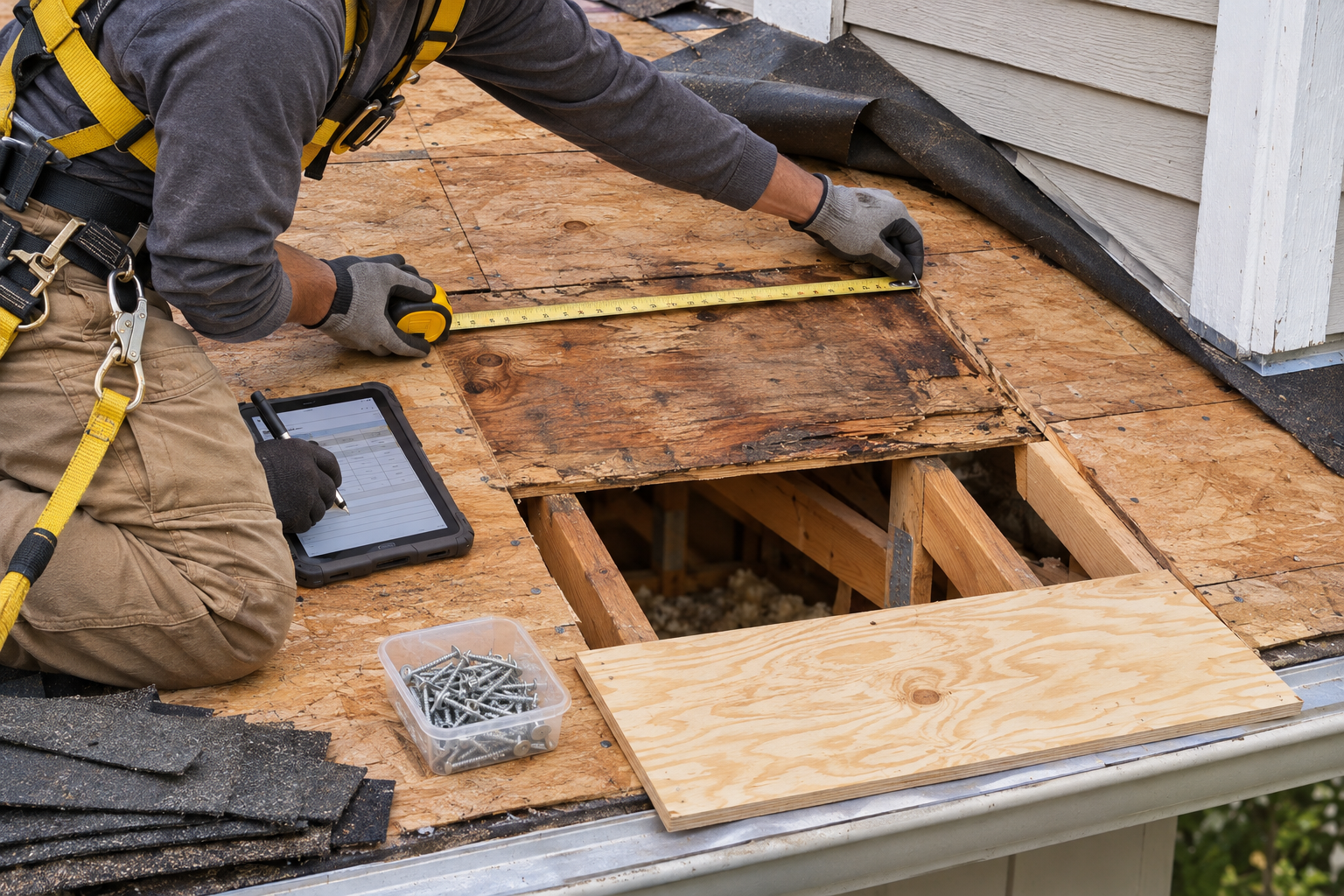
Identify the Existing Decking Assembly
Replacement material needs to match the structural and installation requirements of the roof, not whichever sheet happens to be available that morning.
Record whether the visible deck is plywood, OSB, plank sheathing, or another assembly. Confirm the thickness where an edge is accessible. Note rafter or truss spacing, panel orientation, clips, blocking, and ventilation openings. Older plank decks may contain gaps or deterioration that affect whether the planned roof covering can be installed over the existing assembly.
The roofing manufacturer, adopted building code, engineering requirements, and local inspection practices control the final repair detail. The estimate should avoid promising that a generic half-inch panel will solve every condition. If a section requires additional framing, a change in sheathing thickness, or a larger continuous replacement area, document and price that work separately.
Choose a Pricing Method That Matches the Unknown
Contractors commonly handle concealed decking with a defined allowance, a unit price, or a combination of both.
A small included allowance works when limited replacement is common and the company wants the base estimate to absorb an ordinary amount. For example, the estimate may include the first sheet of matching roof sheathing, with additional sheets billed at the listed unit price. The included quantity should reflect actual project history instead of a number copied into every roof estimate.
A unit-price approach works when the homeowner pays only for the material actually replaced. State whether partial sheets are billed by square foot, by half sheet, or as a full sheet. The crew and office need to use the same measurement rule.
For older roofs with widespread warning signs, a separate alternate price may be more useful. The homeowner can see the known roof replacement price and a defined higher-cost scenario without being told that the upper number is guaranteed.
How Contractors Should Use Allowances Without Losing Control of the Estimate explains how to identify the quantity, pricing basis, included costs, and adjustment method when the final selection or repair amount is not known.
Build a Complete Decking Unit Price
The replacement sheet is only one part of the cost. The unit price needs to cover the work required to complete the repair and return the roof to a ready condition.
Start with the material cost for the specified sheathing, including tax, delivery, and a reasonable waste factor. Add labor for removing the deteriorated section, pulling fasteners, trimming the opening to sound framing, installing blocking where required, cutting the replacement panel, fastening it correctly, and clearing the debris.
The price also has to account for production interruption. A crew that discovers five damaged sheets does not continue installing underlayment at the original pace. Material may need to be lifted, framing conditions reviewed, and the dry-in sequence adjusted while the opening is repaired.
If the company charges a single per-sheet number, build that number from completed jobs. Compare the quantity billed with the labor and material actually used. Separate ordinary panel replacement from repairs involving rafter tails, fascia, truss damage, or complex penetrations. Those scopes do not belong inside a standard plywood unit price.
Material planning still applies when the final quantity is unknown. How Contractors Should Build Material Waste Into an Estimate provides a practical method for connecting order quantities with product-specific waste, minimum orders, and replacement availability.
Define What Counts as Replacement-Grade Damage
The field team needs a consistent standard for deciding whether decking remains or is replaced. Cosmetic discoloration by itself is different from delamination, loss of fastener holding, broken panels, unsupported edges, or material that no longer provides a sound substrate for the roof system.
The decision should follow the applicable code, manufacturer instructions, and the contractor's documented installation requirements. Crew members should not replace sound panels only because new wood looks cleaner. They also should not cover damaged decking to protect the original estimate.
When the condition is uncertain, the responsible supervisor should review it before the crew closes the area. Photograph the panel, show its location on the roof, and record why replacement is required.
Set the Authorization Process Before Tear-Off
The estimate should explain who can approve added decking work and how approval will be documented. Waiting until the roof is open to establish that process wastes weather time and puts the crew in a difficult position.
For a limited quantity, the contract may authorize replacement up to a stated dollar amount before additional approval is required. Larger discoveries should trigger photographs, an updated quantity, and written homeowner authorization. The threshold needs to be large enough to keep routine work moving without allowing a major price increase to appear without notice.
Do not depend on a phone call that nobody records. Send the photographs and price in writing, then save the approval with the project file. If the homeowner cannot be reached, the contract should explain what the crew will do to protect the structure until authorization is received.
Keep the Crew Moving Without Hiding the Cost
Decking repairs affect the daily production plan. The foreman should report the first damage early, not after the entire roof has been stripped. Early reporting gives the office time to reach the homeowner and gives the supplier time to deliver additional material.
Stage a reasonable amount of matching sheathing when inspection history suggests repairs are likely. That does not mean charging for unused material. It prevents a known possibility from stopping the job while the roof is exposed.
Track the sheets installed by roof section and retain before-and-after photographs. The final change order or invoice should match the documented quantity. Clear records are easier for the homeowner to understand and easier for the company to review after completion.
Exclude Structural Repairs That Cannot Be Unit-Priced Responsibly
A decking allowance should not become an unlimited structural repair commitment. Damaged rafters, trusses, wall plates, fascia framing, chimney framing, or widespread ventilation corrections may require a separate scope.
State that the decking unit price applies to ordinary replacement where the surrounding framing is sound and accessible. If tear-off reveals structural damage, stop the affected area, protect the opening, document the condition, and prepare a separate price after the repair method is established.
This boundary protects the homeowner from a vague structural charge and protects the contractor from forcing complex work into a plywood price that was never built for it.
Review Decking Results After Each Roof
After completion, compare the included allowance, actual replacement quantity, labor used, and amount billed. Group the results by roof age, covering type, visible warning signs, and neighborhood or housing stock when those patterns are useful.
If roofs with certain conditions repeatedly require more decking, update the inspection questions and material plan. If the unit price consistently misses labor, rebuild it from the field hours instead of increasing it without understanding the cause.
A concealed condition should still have a defined business process. Inspect what is accessible, identify the assembly, price ordinary replacement clearly, establish written authorization, and separate structural repairs that require their own scope. That gives the homeowner a useful roof price while giving the crew a workable plan when tear-off exposes damage.
Find Your Next Residential Project
Create a HeyPros for Contractors account to browse available homeowner roofing projects and choose the leads you want to pursue.
Related reading:
How Contractors Should Build Material Waste Into an Estimate
How Contractors Should Use Allowances Without Losing Control of the Estimate
How Contractors Should Document Pre-Existing Damage Before Work Begins
Contractors looking for new homeowner projects can explore available leads and opportunities at HeyPros.
