
Hardwood stair refinishing contains very little floor area compared with the labor required to complete it. A standard staircase might have fewer than 50 square feet of exposed tread surface, but almost every foot sits next to a riser, skirt board, baluster, return, wall, or nosing that limits machine access.
Using the same square-foot price applied to an open hardwood floor usually leaves the contractor short on labor. The large floor machine never reaches the stairs. The work is completed with smaller sanders, scrapers, detail tools, careful masking, and repeated trips for stain and finish. The estimate needs to reflect those conditions.
Define exactly which stair components are included
Start by separating the staircase into components instead of treating it as one item. Count the treads and identify any winders, pie-shaped treads, open ends, returns, landings, and changes in width. Record whether the risers and skirt boards are painted, stained, or included in the refinishing scope.
The railing system needs its own decision. Refinishing a handrail is different from refinishing a tread. Newel posts, balusters, caps, and wall rails create narrow surfaces, profiles, and attachment points that require different tools and production rates. If they are excluded, the estimate should say so clearly. If they are included, count them and price them separately.
Photograph both sides of the staircase. A closed stringer against a wall is different from an open staircase with returned nosings and exposed end grain. One open end on 13 treads adds repeated detail work that is easy to miss when the estimator only records the stair width.
Identify what the treads are made from
Not every surface that looks like hardwood can be sanded the same way. Verify whether the staircase has solid wood treads, engineered components, thin renovation caps, or a factory-finished product. Check the nosing and an inconspicuous edge for the thickness of the wear surface before promising a complete color change.
Older solid treads usually allow more correction, but previous sanding may have already reduced the material above fasteners, plugs, or tongue-and-groove joints. Thin stair caps and engineered surfaces leave much less room for aggressive sanding. If the remaining wear layer is uncertain, put that condition in the estimate and define what the contractor will verify before production begins.
Look for loose treads, movement at the riser, split nosings, exposed fasteners, deep pet stains, water damage, and filler that has broken out. Those conditions affect more than appearance. A tread that moves while it is being sanded will not become structurally sound because it receives a new finish.
Structural repairs, tread replacement, and access from below should be priced as separate work. If the condition cannot be confirmed until the old finish is removed, use a written repair allowance or a clear change-order trigger instead of burying unknown repairs inside the refinishing price.
Test the existing coating before setting the labor
The existing finish determines how much work is required to reach clean wood. A worn oil-based polyurethane on solid oak behaves differently from a hard factory coating, several layers of floor paint, adhesive left from carpet, or a tread that has been coated repeatedly without proper preparation.
Complete a small test area when the coating is unusually thick or unidentified. The test should show whether the finish cuts cleanly, gums the abrasive, loads the scraper, or requires chemical stripping in profiles and corners. It also gives the contractor a better view of stain penetration and damage beneath the coating.
Do not promise that every dark stain, pet mark, or previous color will disappear. Sanding can reduce many defects, but removing enough wood to chase one deep spot can change the shape of the tread or nosing. State whether the goal is full removal, reasonable improvement, or a color system designed to blend remaining variation.
Build the labor estimate by phase
A stair estimate becomes easier to defend when the labor is divided into phases. At minimum, account for protection and containment, finish removal, edge and corner work, repairs, final sanding, stain or sealer application, finish coats, between-coat preparation, and final cleanup.
Protection often takes longer than expected because the staircase connects occupied areas. Floors at the top and bottom need protection, painted surfaces next to the wood need clean masking, and dust control has to work without blocking the only practical path through the house. If the crew removes a handrail, gate, or hardware to improve access, include removal and reinstallation.
Rough sanding removes the field of the old coating, but detail work usually controls the schedule. The inside corner at the riser, the underside of the nosing, the edge beside the skirt, and the area around balusters require smaller tools and handwork. Each location is short, but it repeats on every tread.
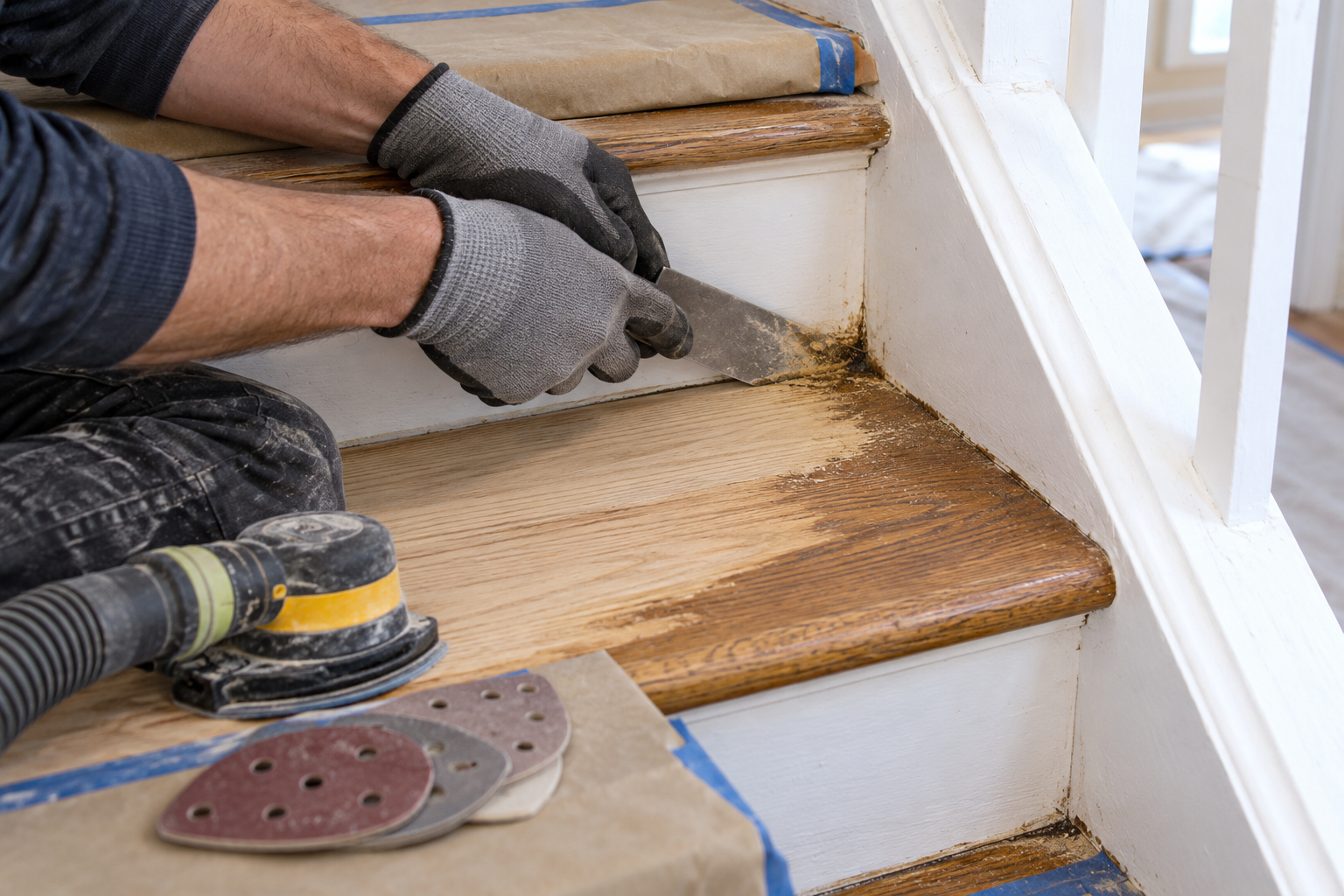
Hardwood flooring professional hand-scraping the inside corner of an oak stair tread during refinishing
Final sanding needs to leave the tread, nosing, and detail areas at a compatible scratch pattern. A corner that was scraped aggressively and not blended through the sanding sequence can show through stain. Rounded nosings also need controlled sanding so the profile remains consistent from one tread to the next.
The coating schedule adds labor even when each application is short. Stain, sealer, and finish may require separate visits because the product needs drying time between steps. Include setup, ventilation, application, cleanup, and travel for each visit. A one-hour coat application is not a one-hour job when the crew must return to the house three times.
Contractors building production rates from completed work can use the process in How Contractors Should Build Production Rates From Real Crew Hours. Track stair labor separately from open-floor refinishing so the faster floor production does not hide the slower detail work.
Use a tread-based estimate with separate detail quantities
Tread count is a better starting unit than square footage, but one price per tread still needs adjustments. Establish a base rate for a standard closed tread of a defined width, then add labor for conditions that repeat.
A practical estimate can contain separate quantities for standard treads, open-end returns, winders, risers, skirt boards, landings, handrail sections, newel posts, and balusters. Repairs and coating changes remain separate. This keeps the estimate readable while connecting the price to the work the crew will actually perform.
Consider a staircase with 13 treads, 14 painted risers, one small landing, one open stringer, and returned nosings. The labor plan might include three to four hours for protection and containment, 12 to 16 hours for initial finish removal, eight to ten hours for corners and nosings, four to six hours for repairs and final preparation, and several additional visits for stain and finish.
Those figures are not a universal price sheet. They show why a staircase that occupies little measured area can consume 35 to 50 labor hours after coating visits and cleanup are included. The contractor's own completed-job records should determine the actual production basis.
Price consumables and equipment for the work being performed
Stair refinishing uses smaller abrasives and more of them. Edger discs, detail sheets, interface pads, scraper blades, vacuum bags, masking products, applicators, and protective coverings belong in the material cost. Abrasive use increases when the existing finish loads the paper or when several profiles require repeated grit changes.
Finish quantity is only part of the material calculation. Small containers of stain, compatible sealer, finish, applicator replacements, and sample materials can cost more per usable unit than bulk floor products. If the homeowner wants a custom color, include the sample preparation and approval step rather than treating it as free estimating time.
Material waste should reflect the package sizes and application method required by the job. How Contractors Should Build Material Waste Into an Estimate explains how measured coverage differs from the quantity a contractor actually needs to purchase.
If the job requires specialized dust extraction, temporary ventilation, or rented access equipment for a tall stairwell, show that cost in the estimate. Equipment already owned by the company still has operating cost, maintenance, filters, and wear that need to be recovered through the pricing system.
Plan around access and cure time in occupied homes
The staircase may be the only route to bedrooms or the main bathroom. Discuss access before the job is scheduled. The homeowner needs to understand when the stairs cannot be walked on, whether an alternate route exists, and how long the selected coating requires before light traffic, normal traffic, rugs, or pets return.
Product instructions control the recoat and return-to-service schedule. Temperature, humidity, airflow, stain color, and coat thickness affect drying. Do not convert a manufacturer's best-case recoat time into a guaranteed homeowner access time without accounting for the conditions in the house.
Some projects are phased to preserve limited access, but refinishing alternating treads often creates more masking, additional mobilization, and a longer total schedule. It can also produce visible differences when stain and finish are applied on different days. If the homeowner requires phasing, price the extra visits and explain the expected result.
Occupied projects also need a daily reset plan. Dust hoses, tools, cords, open finish containers, and removed hardware cannot be left in a way that creates an unsafe path. Our guide on How Contractors Should Plan Work in an Occupied Home Before Day One covers the protection, access, cleanup, and homeowner coordination that should be settled before production begins.
Set clear limits for repairs and color matching
The estimate should distinguish cosmetic refinishing from carpentry repair. Minor nail setting and small filler repairs can be included when the limits are defined. Split treads, loose nosings, broken returns, major squeaks, baluster removal, and structural movement deserve separate pricing.
Color matching also needs a defined standard. Newly sanded stairs may sit next to an older hardwood floor that has ambered, faded, or been coated with a product that is no longer available. A sample can establish an approved direction, but exact matching is rarely a reasonable promise when the substrates, age, and finish systems differ.
Have the homeowner approve the sample under the house lighting before the full staircase is stained. State that natural grain, previous stain penetration, repairs, and existing variation remain visible to some degree. The goal is an agreed finish system, not a guarantee that every board will become identical.
Write the estimate so production and the homeowner read the same scope
List the exact number of treads and the other components included. Identify whether the work covers finish removal to bare wood, screening and recoating, stain color change, painted riser touch-up, rail components, repairs, and adjacent landing areas.
State who is responsible for removing runners, staples, gates, furniture, wall decorations, and personal items near the staircase. Include the expected number of finish coats, the product category, sample approval process, access restrictions, and approximate cure guidance.
Exclusions should be just as specific. If the estimate excludes structural repairs, full removal of deep stains, repainting skirt boards, exact color matching, or correction of previous sanding damage, write that into the scope before the job begins.
The crew should receive the same component counts and repair notes used to build the estimate. When the field only sees “refinish staircase,” the production plan depends on information that never left the estimator's head.
Compare estimated labor with actual labor after completion
Close out the job by recording labor for preparation, sanding, details, repairs, and coating visits. Note the tread count and the conditions that changed production. This makes the next stair estimate more reliable than another price copied from an open-floor job.
Review abrasive use and return trips as well. If the crew repeatedly needs another half day for corners or one more visit for finish, the estimating template should change. If certain repairs appear on most older staircases, add a standard inspection item so they are identified during the walkthrough.
Hardwood stair refinishing becomes profitable when the estimate recognizes the concentrated labor in every tread. Count the components, inspect the construction, test the coating, price the repeated detail work, and include every required visit. The small square-foot measurement should never be allowed to hide a full production schedule.
Related reading:
How Contractors Should Build Production Rates From Real Crew Hours
How Contractors Should Build Material Waste Into an Estimate
How Contractors Should Plan Work in an Occupied Home Before Day One
Contractors looking for new homeowner projects can explore available leads and opportunities at HeyPros.
